Why Training Matters in Witchcraft

Intuition Is Not Enough

There is a phrase that circulates often in modern witchcraft spaces: “Just follow your intuition.”

It is usually said with good intentions. It is meant to reassure, to empower, and to remove fear or self doubt from the equation. And intuition does matter. It is often where the path begins. But when intuition is treated as the whole of the work rather than the place where the work starts, something essential is missing.

Intuition by itself is perception. It tells you that something is happening. It does not automatically tell you what that something is, how it functions, or what it requires of you over time.

In every other discipline that we take seriously, we understand this without much argument. A musician may have a remarkable ear, but they still study theory, technique, and form. A gifted actor still trains breath, timing, and language. A talented artist still learns anatomy, composition, and how materials behave under stress. Skill develops because talent is given structure, repetition, and accountability.

Witchcraft is no different.

It is a practice that works with power, symbolism, altered states, and perception. Those things carry weight. They shape how a practitioner understands themselves and the world around them. Feeling can guide someone toward the work, but feeling alone does not teach how to interpret experiences, how to contain what is opened, or how to live responsibly with the results.

This is where training enters the picture, and it is important to be clear about what that means. Training does not automatically imply a coven, a formal initiation, or a single mentor. Many witches develop their practice independently, and self directed training can be real and effective work. But self training still requires discipline. It requires study, repetition, reflection, and a willingness to question one’s own conclusions. It asks for commitment to learning, rather than reliance on whatever happens to arise in the moment.

Without that commitment, it becomes very easy to mistake emotional intensity for insight, imagination for contact, or desire for meaning for meaning itself. That confusion is common, and it is understandable. It is also preventable.

Training gives intuition context. It gives experience a framework. It allows perception to deepen into understanding, rather than remaining a series of powerful but unexamined moments.


Feeling Is Where Most Witches Begin

Most witches come to the Craft through feeling first. A sense of recognition. A pull toward symbols, seasons, ritual, or the unseen. Something resonates before it can be explained, and that resonance matters. It is often the doorway.

That initial sensitivity is not a flaw. It is the reason many people find their way to witchcraft at all.

But feeling, on its own, is only the beginning of perception. It alerts you that something is present. It does not automatically tell you what that presence is, where it comes from, or how it behaves once engaged.

Without training, experiences tend to blur together. Everything feels significant. Everything feels charged. Over time, that lack of distinction can make it difficult to tell whether an experience is symbolic, psychological, energetic, spiritual, or some combination of all of the above. The work becomes intense, but not necessarily clear.

This is where many practitioners get stuck.

They have experiences, sometimes very powerful ones, but no reliable way to interpret them. They feel movement, emotion, or presence, but they do not yet have the tools to understand what kind of movement they are sensing, or what to do with it once it arises.

Training slows this process down in a useful way. It teaches you to observe rather than immediately conclude. It encourages you to revisit experiences instead of building identity around them. It creates space between perception and meaning, which is where discernment develops.

Over time, that space becomes invaluable.

It allows a practitioner to notice patterns rather than isolated moments. It helps separate imagination from trance, emotional release from energetic shift, symbolism from contact. None of these distinctions diminish the experience. They deepen it.

Feeling does not disappear with training. It refines. It becomes quieter, steadier, and more trustworthy. Instead of pulling you in every direction at once, it begins to point with greater precision.

This is how perception matures into practice.


What Training Actually Provides

Training in witchcraft does not arrive all at once. It accumulates slowly, often quietly, through repetition, study, reflection, and lived experience. Its effects are not always dramatic, but they are stabilizing. Over time, training changes how a practitioner relates to their own perceptions and to the work itself.

One of the first things training offers is language.

When experiences can be named, they can be examined. Vocabulary does not reduce mystery. It gives the practitioner a way to think clearly about what is happening without immediately turning it into myth, identity, or belief. Naming creates a small but crucial distance, and within that distance, understanding can begin to form.

Training also provides containment.

Containment is one of the most overlooked aspects of magical practice. Grounding, boundary setting, and energetic hygiene are not embellishments or optional habits. They are foundational skills that allow the work to remain sustainable over time.

Containment allows a practitioner to open and close deliberately. It teaches how to enter altered states without becoming lost inside them, and how to return fully present afterward. This is about stability. Stability is what allows power to be engaged repeatedly without eroding the practitioner’s sense of self or balance in daily life.

Another gift of training is discernment.

Discernment develops when a practitioner learns to pause before drawing conclusions. It encourages revisiting experiences rather than immediately assigning meaning to them. Over time, this practice sharpens perception.

Discernment helps a witch recognize:

  • when something is symbolic rather than literal
  • when an experience arises from the psyche rather than from external contact
  • when emotion is moving through the body versus when energy is shifting
  • when imagination is active versus when trance is deepening

These distinctions are not rigid categories. They are points of orientation. They allow the practitioner to work with what arises rather than being carried by it.

Training also deepens ethical awareness.

Ethics in witchcraft are not abstract rules imposed from outside the practice. They arise through relationship. Relationship to oneself, to others, to spirits, to land, and to the unseen. Training encourages reflection on impact and responsibility, to notice how actions ripple outward rather than stopping at intention.

Ethical training asks difficult questions. It asks not only what can be done, but what should be done, and why. It also asks at what point action itself becomes the wrong choice. Learning when to leave something untouched requires clarity.

Perhaps most importantly, training builds reliability.

A trained practitioner learns how they respond under pressure, fatigue, emotional stress, and uncertainty. They learn what their strengths are and where their blind spots tend to appear. This self knowledge is not glamorous, but it is invaluable.

Reliability is what allows intuition to be trusted. It becomes steadier and more consistent. It can be tested against experience. It can be returned to. It can be questioned without collapsing.

This is how practice matures.


The Myth of the Natural Witch

There is a persistent idea in modern witchcraft that some people are simply born knowing how to do the work. The natural witch is often described as intuitive, sensitive, gifted, and immediately capable. Experiences come easily. Perception feels effortless. The work feels familiar rather than learned.

Sensitivity does exist. Some people perceive more readily, remember faster, or slip into altered states with little effort. That is real, and it should not be dismissed. But sensitivity is not the same thing as mastery.

Untrained sensitivity tends to magnify everything at once. Emotional states, imagination, memory, desire, and genuine perception arrive together, layered on top of one another. Without structure, it becomes difficult to tell which thread is being pulled at any given moment. The work feels intense, meaningful, and deeply personal, but it often lacks clarity.

Over time, this can lead to exhaustion or confusion rather than growth. Experiences accumulate without integration. Power is felt, but not always understood. Insight appears, but it is not consistently grounded. The practitioner may move from one moment of intensity to the next without developing a stable relationship to the work itself.

Training does not diminish natural sensitivity. It gives it somewhere to settle.

With training, sensitivity becomes directional rather than overwhelming. Perception develops edges. Experiences can be revisited, tested, and understood within a larger context rather than treated as isolated revelations. What once arrived all at once begins to sort itself into patterns.

The idea of the natural witch often carries an unspoken pressure to remain untrained, as though study or discipline would somehow contaminate authenticity. But no other craft expects raw talent to remain untouched in order to stay real. Art, music, and performance all recognize that skill matures through engagement, not avoidance.

Witchcraft is no different.

Sensitivity is an opening. Training is what allows that opening to remain intact over time.


Why This Matters Now

Witchcraft is more visible now than it has been in a very long time. Books, social media, online communities, and aesthetic representations have made the Craft accessible to people who might never have encountered it otherwise. That accessibility has value. It has allowed people to reconnect with practices that were once hidden, suppressed, or quietly transmitted.

Visibility also changes how a practice is approached.

When witchcraft is framed primarily as identity, aesthetic, or emotional expression, the slower work of training can fade into the background. Feeling becomes central. Experience becomes currency. Intensity is mistaken for depth. The pressure to have something happen, to feel something meaningful, can quietly replace the patience required to learn how the work actually functions.

This environment does not encourage discernment. It rewards immediacy.

Without training, practitioners are often left to navigate powerful experiences alone, without context or support. They may interpret everything symbolically, literally, or personally, without having the tools to sort one layer from another. Over time, this can lead to confusion, burnout, or a loss of trust in one’s own perception.

Training offers a counterweight to that pace.

It creates room for slowness, reflection, and repetition. It encourages practitioners to sit with experiences rather than immediately narrating them. It reminds us that not every moment requires interpretation, and not every experience needs to be shared or acted upon.

In a time when certainty is often rewarded and doubt is treated as weakness, training restores the value of questioning. It normalizes not knowing. It allows practitioners to hold complexity without rushing toward conclusion.

This matters because witchcraft is not only personal. It is relational. It shapes how people engage with power, responsibility, and meaning. When those engagements are unexamined, the consequences do not stay contained within the individual.

Training does not make the Craft less accessible. It makes it more sustainable.


Closing

Training in witchcraft is not about authority, hierarchy, or proving legitimacy. It is about relationship. Relationship to perception, to power, to consequence, and to time.

Intuition opens the door. Sensitivity allows entry. What determines whether someone can remain in the work over years rather than moments is how that opening is tended.

Training teaches patience with uncertainty. It teaches how to listen without rushing to interpret, how to hold experience without immediately acting on it, and how to recognize when clarity has arrived and when it has not. It asks for attention rather than certainty, and for responsibility rather than performance.

This kind of practice is quieter than many people expect. It does not always announce itself. It does not promise constant intensity or easy answers. What it offers instead is depth, stability, and the ability to return to the work again and again without losing oneself along the way.

Witchcraft has always required care. Care in how it is practiced, care in how power is held, and care in how meaning is made. Training is one expression of that care.

It is not a rejection of intuition.
It is a commitment to honoring it well.
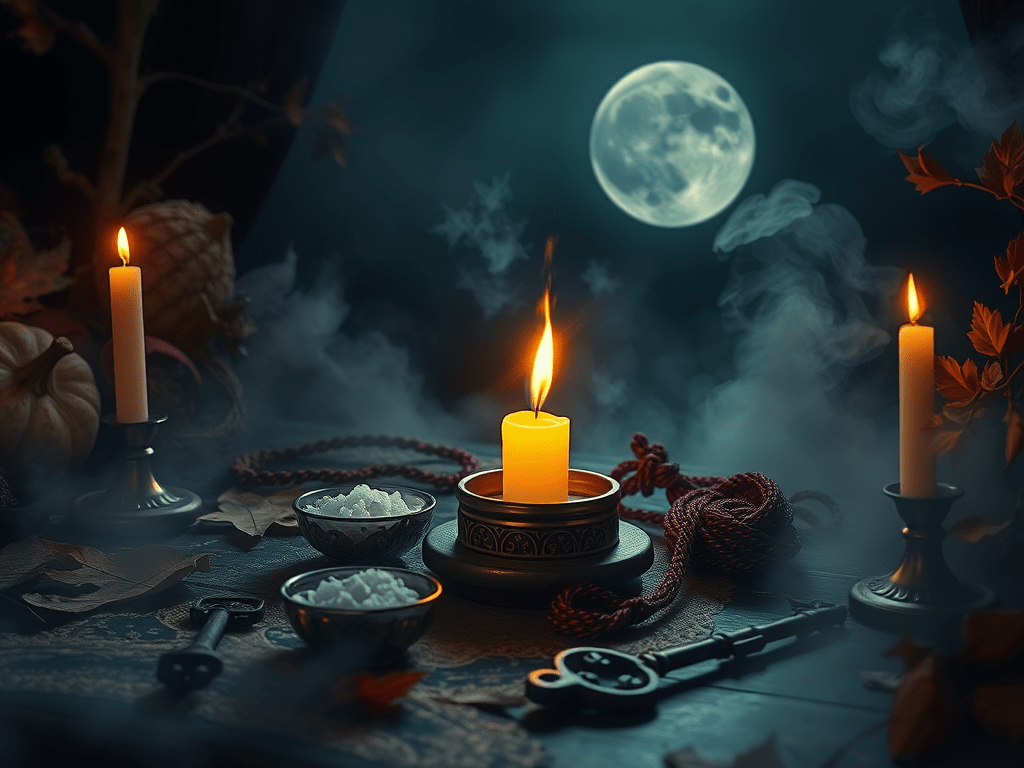
Witchfire for the Full Moon at Samhain

The year turns and the dark leans in. Samhain asks for clean work and honest power. This is a good time to speak plainly about Witchfire.

By Witchfire I mean the inner current a witch raises and directs. It is not a literal flame. It is will, breath, and spirit gathered into one stream and put to work. When it rises, practice feels steady and exact. When it slips, everything thins out. The body knows the difference. Some feel warmth in the chest or hands, others a fine tingling along the spine, and others a cool bright pressure behind the eyes. Breath slows. Attention sharpens. The aim and the body line up.

Raising Witchfire is simple. Sit or stand with your spine easy and your jaw loose. Breathe in to a quiet count of four and out to a quiet count of six, three cycles. Speak one sentence about the result you are after. Say it once and mean it. Wake a little rhythm in the body: rub your palms, tap your heel, drum the table. Then go still and notice the moment when your attention comes into one piece. That shift is the first rise of Witchfire.

Holding and shaping it is also simple. Give the current a home and a job. A candle can be a hearth. A cauldron of sand, an iron key, a length of cord, a mirror, or the circle itself can hold it just as well. Keep the aim to one clear line. Bring the power up with breath or chant, then release it into the vessel or act that fits the work. When you are done, close clean. Thank what you called, release what should go, and seal the space. Ground with food and warm water, and rest your senses.

Here are three ways to bring Witchfire into practice at Samhain. Choose the one that suits your house and your tools.

Iron and Salt. Set a small dish of salt on the altar and place an iron key or nail in your palm. Breathe the way I described above and speak your single sentence into the iron. Stand the iron in the salt and let your hands grow warm or bright with focus. On a long, steady exhale, pour the current into iron and salt and say, quietly, that it is held and working. When you are ready to end, cover the iron with a bit more salt and say that it is seen and sealed. This is a dry, steady way to work in a small space.

The Witchfire Candle. If flame speaks to you, set one candle in a safe holder or in sand. Settle your breath, name your aim once, and trace a small circle above the wick as you whisper that this light will answer yours. Light the candle and, on the next few exhales, press the inner heat into the flame. Hold your hands near it and feel the link take. When the working rests, snuff the light and tell it to rest while the work continues.

Cord and Breath. Take a length of red or black cord in both hands. Breathe to four and six and speak your aim. With each inhale, feel the current rise from chest to hands. With each exhale, feed that current into the cord. After several breaths you will feel the cord wake in your grip. Tie a simple overhand knot to anchor what you have set. Wear the cord for a time, or lay it across the altar. When it has done its job, untie the knot, breathe once, and tell it the work is done and grounded.

If you lead a group at Samhain, consider a short call and answer to raise Witchfire together. Keep it spare. A leader calls “Fire of will,” the circle answers “Rise and be ready,” repeated a handful of times until the current stands up in the room. Move it into the shared vessel or act without hurry. Close well.

Samhain can stir memory and strong feeling. Work within your limits. If you become lightheaded, slow down, sit, and breathe. Eat something warm afterward. Sleep on the results before making large decisions. Write what you felt and what you saw, especially the first clear image or phrase that rose when the power came up. Over time your body will learn its own signs and your hands will know which vessel suits which task.

Samhain invites honest work. Witchfire is the power that makes that work real. Raise it with breath. Give it a clear job. House it in something that suits your hand and your house. Close well and eat. That is enough.

Blessed be.


Join us on Patreon

If this work is useful to you, our Patreon is a public teaching space for witchcraft from foundations through advanced arts and sciences. You will find complete rituals, seasonal workings, guided meditations, print-ready pages, and access to Zoom classes, special events, and intensives. This space is separate from our initiatory Tradition. No oathbound material is shared. Choose a tier, join the Discord, and begin.

Between the Candle and the Cable: Witchcraft, Discernment, and the Path Ahead

A traditional witch speaks on commodification, integrity, and the future of the Craft.


Introduction

There’s been a lot of conversation lately about the rise of online witchcraft teachers, the commodification of the Craft, and what it means to lead or learn in a world that moves faster than the turning of the seasons. Some of these conversations are long overdue. Some are rooted in necessary caution. But some forget where we’ve come from. And more importantly, where we’re going.

As a traditional witch who has walked this path for over thirty years, I’ve seen waves of change, and I’ve weathered them. Today, I want to offer not a defense, not a rebuke, but a reflection. A spiral walk through where we’ve been, where we are, and the witches we must become.


The Price of Breath: Commodification Isn’t a Pagan Problem, It’s a Cultural One

Let’s start with the truth: commodification is not some modern poison that’s only recently seeped into the cauldron. It is the air we breathe. Every aspect of our lives is filtered through an economic lens: food, water, shelter, healthcare, education, and yes, even spirituality. We live in a world where entire religions are monetized, where wellness is branded, and where sacred symbols become product lines.

So when people speak about the commodification of witchcraft as though it is a uniquely modern blasphemy, I wonder what world they think we’re living in. The issue isn’t that money has entered the picture; it’s that we often fail to see the larger picture altogether. Witchcraft exists within this world, not outside it. If we want to change the culture, we must first acknowledge it. And that means recognizing that yes, we charge for classes, we sell candles, we write books, not because we are corrupt, but because we, too, must survive.

And ironically, this presence in the marketplace, though imperfect, has also made space for us. It has created visibility. It has offered some measure of reputability. It has allowed witches, for the first time in millennia, to be seen not only as outsiders but as contributors to culture. That’s not a flaw. That’s progress, however uneven it may be.


The Oldest Exchange, Witchcraft Has Always Been a Trade

Witchcraft has always been a trade. Not a metaphorical one, but a real, tangible exchange of energy and skill. In ancient Babylon, priestesses accepted offerings for divination and blessings. In rural Europe, the village cunning person might be paid in eggs, wool, or labor for healing a sick child or blessing the crops. In Appalachia, granny witches received whatever neighbors could spare in exchange for poultices, midwifery, or protection spells.

This wasn’t a capitalist system, but it was an economy. One built on reciprocity, survival, and value. The witch’s labor has always had worth, not just spiritually, but also practically. To frame modern pricing as some kind of betrayal of tradition is to ignore this unbroken chain of sacred service.

The form of exchange has changed, from eggs to PayPal, but the principle remains: energy for energy. Knowledge for nourishment. Time for tribute. This is not commodification in the hollow sense. It is covenant.


Visibility and the Marketplace: What Sells Is Also What Survives

There’s a strange irony at play in today’s magical landscape. On one hand, we lament the commercialization of the Craft, crystals in every big-box store, moon water labeled as luxury skincare, mass-produced tarot decks with gilded edges and no soul. And yes, it can be disheartening. But on the other hand, this visibility has done something profound: it has made our existence known.

It wasn’t that long ago that being a witch was enough to cost you your job, your children, your life. We lived in shadows. Today, a young seeker can walk into a bookstore and find an entire section dedicated to our practices. That is not trivial. That is not nothing. That is a kind of power our ancestors would have marveled at.

Visibility also means safety, for many of us. Not universally, not without cost, but it’s harder to burn witches in public when witchcraft is in the mainstream. It means we can find one another, share resources, build community, and teach in ways our predecessors could not. It has opened the door for people who never would have found the Craft before to walk a path of power and healing.

Yes, visibility invites dilution. But it also invites survival. And more than that, it creates a doorway. One that can lead to deeper study, to true community, to real transformation. It is up to us to guard that doorway with wisdom, not scorn. To meet those drawn in by beauty and teach them depth. The marketplace is not our enemy. It is our terrain. What matters is how we walk it.


Where We Came From: Lineage, Access, and Shifting Gateways

Once upon a time, the gates were locked. To learn the mysteries, you had to be initiated. To be initiated, you had to be vouched for. To be vouched for, you had to find someone who would even admit the path existed.

Traditionally, witches met in secret. Information was passed from mouth to ear, hand to hand. This wasn’t elitism, it was survival. It also meant that knowledge was limited to those with the right connections, geography, and luck. If you didn’t live near a coven, or you were queer, or disabled, or the wrong race, or simply not trusted, you didn’t get in.

That has changed.

The internet cracked the gates wide open. Books poured in. So did forums, videos, blogs, TikToks. What once required years of searching can now be Googled in seconds. But access is not the same as understanding. And knowledge is not yet wisdom. We need more than content. We need discernment.


From Covens to Cunningham: The Distance Between Circles

The 20th century saw a dramatic shift. When Scott Cunningham published “Wicca: A Guide for the Solitary Practitioner” in 1988, he changed everything. Suddenly, you didn’t need a coven. You could dedicate yourself to the gods and begin a path alone.

This was revolutionary and necessary. It opened the door to thousands who would never have been welcomed into a traditional coven. But it also began a migration from group practice to solitary exploration. From mystery school to self-study. From oaths to openness.

In doing so, something was lost. Not in value, but in weight. Initiatory paths are not better, but they are different. They are shaped by elders, by shared rites, by lineage, by the crucible of community. And when those paths are rare, or corrupted, or commercialized, seekers are left to wander without map or mentor.


The Solitary Path: The American Spell of Self

There is a uniquely American mythos woven through modern witchcraft, the idea that the self is sovereign above all. That one’s own will is enough. That each person can be their own priest, their own coven, their own tradition.

There is power in this. But also peril.

We have inherited a rugged individualism that serves capitalism better than it serves magic. Real transformation often requires relationship, reflection, challenge, and accountability. The solitary path is not wrong. But it is hard. And without guidance, it can become a loop that never deepens. We must remember that being self-taught does not mean we are self-made.


Between Hunger and Harm: Trusting Again After the Wound

Many seekers today are not merely curious. They are wounded. By religion. By culture. By family. By former teachers. And they come to witchcraft hungry, for truth, for power, for freedom, for healing.

But hunger makes us vulnerable. And the online landscape is full of voices ready to feed us, some wise, some manipulative. The wound that drives us to seek can also blind us to red flags. It can lead us to pedestal people, or rush into oaths, or overshare before safety is earned.

Rebuilding trust takes time. Especially after betrayal. But discernment doesn’t mean we close every door. It means we learn to knock more wisely. To walk with both caution and courage.


Discernment, Devotion, and the Sacred Act of Asking Why

At the heart of all true paths is the question: why? Why this spell? Why this teacher? Why this tradition? Why do I want this? Where does this come from? What does it cost?

Discernment is not cynicism. It is clarity. It is love with boundaries. It is faith with teeth. It is the willingness to slow down and see what is actually being offered, and what is being asked.

The witches of the future will not be those who know the most lore. They will be those who can look into the heart of a thing and know whether it is hollow or holy. That’s what we need now. That’s what devotion looks like in an age of distraction.


Why We Pay Our Teachers: Energy, Time, and Sacred Exchange

Teachers today are expected to do far more than simply transmit knowledge. They must develop skill not only in their craft, but in pedagogy, leadership, and accessibility. They must build courses, write materials, research history and lore, adapt to changing technology, and hold energetic space. They must field questions, offer feedback, provide ethical frameworks, and serve as guideposts in a world oversaturated with information but starving for wisdom.

Hosting a class, whether online or in person, carries costs, including Zoom subscriptions, physical venues, supplies, marketing, time spent planning and following up, emotional labor, and spiritual preparation. In years past, a teacher might have been gifted eggs or labor. Today, it’s more likely to be PayPal or Patreon. But the spirit of exchange is the same.

And even when teachers offer their work freely, as many do, there is still value being given. For those teaching under 501(c)3 non-profits or in purely volunteer spaces, an exchange can still be honored. Make a donation. Share their work. Clean up after the ritual. Offer thanks with more than words. Bring them a cup of tea. These are not merely gestures. They are offerings. They are respect made visible.

To say we should not pay for spiritual teaching is to ignore the reality of our economy and the deep tradition of exchange that our ancestors honored. A priestess leading a rite is not simply casting a spell; she’s spent hours writing the working, gathering and paying for supplies, holding the weight of the circle, the working, and the well-being of the gathered. That deserves compensation, whether in coin, contribution, or care.

In my first coven, we always grabbed a plate of food for our Priestess first, fed her, let her relax, and did all the clean up. We also bought charcoal, herbs, candles, and oils to replenish what we used. We all benefited, and I never forgot this lesson. I do it to this day.


The Questions That Matter: Red Flags and Right Fits

So, how do we know which teachers to trust? Whether they’re online, local, published, or self-taught, we owe it to ourselves to ask questions. Not just about the class, but about the person leading it. Here are some of the questions I wish someone had given me thirty years ago:

  • What is your background and training?
  • Who trained you? Where did your teachings come from?
  • How long have you been practicing, and how long teaching?
  • What are your spiritual values?
  • What are your boundaries? What are your expectations of students?
  • How do you handle power dynamics?
  • Are you open to feedback? Correction? Dialogue?
  • Do you welcome students growing beyond you?

And here are some red flags to watch for:

  • They discourage questions or get defensive when challenged.
  • They demand loyalty without earning trust.
  • They blur boundaries, especially around money, sex, or emotional labor.
  • They don’t cite sources, refuse peer review, or rewrite history.
  • They promise quick power, easy spells, or guaranteed results.
  • They isolate you from other teachers or traditions.

You don’t need perfection. But you do need integrity. And clarity. A good teacher will invite questions, not fear them. They’ll be transparent about their history, their gaps, and their growth. They’ll tell you who they learned from, and they’ll encourage you to keep learning beyond them.

And you, dear witch, must be a questioner. Of self, of culture, of content, of tradition. Our future depends on it.


Between the Worlds: Adapting the Craft in the Digital Age

We are in the middle of a sea change. Traditional teachers, those of us who trained in basements, woods, and whispered spaces, are being asked to evolve. To learn new platforms. To stretch old bones into new shapes. To bring the mysteries into rooms with ring lights.

It is not easy. But it is necessary.

The digital age has transformed how seekers find the path. No longer must they stumble into a metaphysical shop or hope to meet someone at a festival. Now, a scroll on TikTok or a link on YouTube can become the doorway. And for teachers, this means shifting how we serve without sacrificing what we guard.

We must learn new tools. Hosting Zoom rituals is not the same as calling quarters in a forest. Filming a teaching series is not the same as holding a student’s hand through shadow work. But the essence can still be honored.

The sacred must still be felt.

Many of us have spent years, decades, walking this road. And now we are building bridges into this newer world. We’re learning to write PDFs and edit audio. To manage online communities. To translate presence through pixels. And this, too, is part of the Work.

But let us be honest. It takes time. It takes energy. It takes a willingness to change and to be changed. The screen is not a substitute for the Circle. But it can become a vessel. A chalice. A flame carried forward, if done with care.

We ask seekers to meet us with patience. To understand that digital doesn’t mean lesser, and old doesn’t mean outdated. That both carry wisdom. That both can serve.

We must also speak the truth: not everything old is accurate. And not everything new is wrong.

There are texts, teachings, and theories passed down through generations that have not stood up to the light of history, archaeology, or cultural analysis. Some have even been disproven, but still circulate, reappearing as if time has not touched them. Just because something is ancient does not make it infallible.

I have deep reverence for my first priestess. She was a brilliant teacher and shaped much of my early Craft. But even she, for all her wisdom, passed on information I later discovered to be incorrect. And when I found those errors, I corrected them, not out of disrespect, but out of devotion. Devotion to truth. To integrity. To the living current of our practice.

This path demands that we be fierce in our discernment. That we wield our minds as well as our hearts. That we become, not followers of tradition for tradition’s sake, but stewards of wisdom. Sharpened by inquiry. Guided by conscience. Honoring what has come before while being unafraid to evolve.

The world is changing. So are we. The Craft has always survived because it knows how to transform. Let that be true of us now.


The Flame That Carries On: A Closing Reflection

We are the living threads in a tapestry both ancient and still in the loom.

Witchcraft is not a museum. It is not a fixed point in time. It is the fire stolen, the bone buried, the whispered name across centuries. It moves. It breathes. It changes form so it may survive, and changes us in return.

As we move forward, let us do so with eyes wide open. Let us be bold enough to ask questions, humble enough to admit when we are wrong, and wise enough to sit at both the hearth and the keyboard with reverence.

To those who carry the candle, and to those who transmit the signal, may you each tend the mystery well.

The Craft endures. And through us, it lives.

The Witch Is a Choice: Myth, Memory, and the Making of the Craft

We live in a world that has forgotten how sacred choice is.

To be a witch is not simply to be born with “gifts,” or to feel a pull toward the stars, the bones, the wind. Those things may call you, but calling alone is not enough. Witchcraft is a path walked with intention. It is an act of remembrance. A rebellion. A devotion. And most of all, it is a choice.

The word witch carries centuries of shadow and fire. It has been used to condemn, to silence, to burn. But it has also been used, by those who survived, to reclaim power, to heal, to protect, and to create. The word has teeth and tenderness both. It is not aesthetic. It is not trend. It is an oath.


The Human Birthright

There is a deep truth we must say plainly: the abilities often attributed to witches, intuition, energy sensitivity, spiritual communication, healing touch, dreamwork, spellcraft, the shaping of reality, are not limited to a special few. These are human abilities.

Some of us may awaken to them more quickly. Some may be born into families that nurture them, honor them, or protect them through lineage. But no one is excluded from the birthright. Witchcraft is not elitist. It is not gatekept by bloodline alone.

Every human being has the capacity to sense, to shift, to speak with the unseen. But not every human chooses to walk that path. That is what sets the witch apart.


Remembered in the Blood – The Science of Our Magic

Science is beginning to explore what witches have always known: we carry more than DNA in our cells. We carry memory, emotional echoes, behavioral patterns, survival responses passed down through generations. This is epigenetics: the way trauma, instinct, and sensitivity to the world can be inherited.

So when you feel something stir within you at the sound of a chant, or find yourself dreaming in symbols you’ve never studied, you are not imagining it. You are remembering.

You are tapping into the reservoir of all those who came before you, the mothers who whispered over herbs, grandfathers who watched the stars, ancestors who reached toward mystery in their own language and time.

You are not more powerful than anyone else. But you are awake. You are listening. You are choosing to answer the call and take the next step with reverence.


The Path to Power – No Shortcuts, Only Steps

Power is not granted by aesthetic.

It is not found in a TikTok spell or bestowed by bloodline.

Power is a path. And like all true paths, it must be walked.

There are no shortcuts. The Craft demands evolution. The path unfolds like this:

  • Knowledge – gathering lore, tools, teachings, systems.
  • Experience – testing that knowledge in the world.
  • Understanding / Actualization / Integration – when the lessons become instinct, internalized within you.
  • Wisdom – knowing not only how to work, but when and most importantly why.
  • Power – the quiet, earned hum of alignment between will, purpose, and reality.

You must walk the path. There’s no other way. But each step deepens your roots, sharpens your senses, and strengthens your flame.


Initiation – The Threshold No One Crosses Unchanged

Witchcraft is a path of initiation, but it’s not always in the way people expect.

Yes, there are formal initiations. Ceremonies. Oaths. Lineage rites that pass power and wisdom from teacher to student. And these are real. They are sacred. They matter.

But the Craft also initiates in other ways. Through grief. Through fear. Through the long dark night of the soul. Through the moment when your old life breaks and something new demands to be born.

Initiation means crossing a threshold and knowing that you can’t go back.

The witch is not just someone who studies magic. The witch is someone who has been changed by it.


Alone and Together – The Witch in Solitude and Circle

Many witches begin alone. And there is beauty in that. Solitary practice teaches self-trust and deep listening.

But the Craft is not only solitary. It is also relational.

Historically, magic was communal, shared in kitchens, fields, hearths. Even today, something powerful happens when we gather: we witness each other. We challenge each other. We raise power together.

You don’t need a coven to be a witch. But you do need connection. Every flame needs a hearth. Even the solitary witch benefits from shared fire now and then.


More Than the West – Honoring the World’s Magic

This piece speaks from the perspective of Western witchcraft. But the magical traditions of humanity are vast, diverse, and sacred.

From African Diaspora lineages to Asian animism, from First Nations medicine to Oceanic spirit paths, there are many ways to know the unseen, to work with energy, to honor ancestors and spirits.

Witchcraft is one thread in a much larger tapestry.

We honor what we know, but we also honor what we do not practice. Respect means listening. Learning. And never pretending that all magic looks like ours.


The Witch in the World – Responsibility and Reckoning

The witch does not practice only for herself. She stands at the edge of the world. She sees what others ignore. She heals what others won’t touch.

Witchcraft is not a retreat from reality. It is a response to it.

We are called not just to manifest for ourselves, but to protect the sacred. To resist injustice. To carry forward the flame of remembrance, responsibility, and radical hope.

To be a witch is to hold power, and power must be tempered by purpose.


The Witch Is Not Her Hashtag – She Is the Diamond

In today’s world, you’ll hear: Green Witch. Cosmic Witch. Love Witch. Shadow Witch. And while these names may help express interest, they are not identities. They are facets, not separate stones.

There is only one Craft. One diamond, many glints.

Just as all gods may be facets of one divine diamond, so too are the many expressions of the witch simply different faces of a singular, sacred calling.

You are not just your favorite spell or element. You are the whole gem.


Witch, Sorcerer, Magician – Names with Purpose

Not all magical practitioners are witches. Some are ceremonial magicians. Some are sorcerers. Some are cunning folk, brujas, spirit workers, shaman or mystics.

These are not aesthetic differences, they’re structural. They point to different philosophies, systems, and goals.

Choose your name wisely. Let it reflect what you do and how you walk the path, not just what sounds cool.


The Roots and Rivers – What Shapes the Modern Craft

Modern witchcraft, especially in the West, is shaped by both folk magic and ceremonial systems.

The rituals many of us use, calling the quarters, using elemental tools, invoking planetary forces, were deeply influenced by Western occultism: the Golden Dawn, Thelema, Kabbalah, alchemy, Hermetic thought.

That doesn’t make them impure. It makes them known. And when we know where our tools come from, we can use them more powerfully.


You Cannot Read the Past with Modern Eyes

We often romanticize the ancient world. But we can’t lift ancient practices into modern life without understanding context.

Just as many modern Christians misread the Bible by applying today’s morals and assumptions to ancient Jewish texts, so too do witches sometimes claim antiquity without understanding it.

The truth is: we are revivalists. And that’s not a weakness, it’s a calling.


Taking Off the Rose-Colored Veil

We have wrapped witchcraft in myth, and that’s fine, if we know it’s myth.

But too often, we pretend.

We pretend we’re the unbroken line of ancient priestesses. That we know exactly what was done in Neolithic caves. That our symbols are untouched by history.

It’s time to stop pretending.

We are writing the myths now. Let’s write them with integrity. Let’s build something our descendants won’t have to rewrite.


Mystery Is Not Make-Believe

Witchcraft is a mystery tradition. But that doesn’t mean it’s a free-for-all.

Mystery requires training. A path. A framework. You don’t need a lineage to begin, but you need foundation, study, and respect.

Saying “I’m a witch because I feel magical” is like saying “I’m Catholic because I like Mary,” while knowing nothing of the Saints, Sacraments, or Stations.

Intuition is the start. Not the end.

The Craft deserves depth. And so do you.


What the Tools Really Do

Our tools are symbolic keys. They speak to the subconscious. They unlock ritual states. They help us focus, anchor, awaken.

The candle isn’t magic. You are.

The herb isn’t power. It’s a mirror.

The ritual isn’t theater. It’s alignment.

Tools are the outer shape of inner work. They awaken the part of you that remembers how to cast, how to call, how to become.


Ritual Is the Architecture of Change

Ritual is how we shift our state. It’s the scaffolding for the sacred.

Whether basic or advanced, every ritual has the same goal: to move us from mundane to magical. To align body, will, emotion, and spirit. To create coherence. And from that, to cast change into the world.


Embodied Craft – The Body Remembers What the Mind Forgets

Magic lives in the body. In breath, posture, movement, sensation.

Gesture is spell. Voice is vibration. Touch is energy.

Your body is not separate from your power; it is your power. It holds memories older than thought. It knows how to move energy. It knows how to anchor spirit.

To be a witch is to be fully in your body, not apart from it.


Sidebar: Common Myths About Witchcraft

  • Witches worship the devil.Most don’t. The devil is a Christian concept.
  • Witchcraft is anti-Christian.Not inherently. Some witches blend paths.
  • You have to be psychic or special.You have to practice. That’s it.
  • It’s all love and light.No. The path includes shadow, death, grief, truth.
  • You can manifest anything instantly.Magic is real—but it’s also work.

What Witchcraft Is

Witchcraft is not just a set of tools or spells. It’s a way of being in the world.

It’s conscious. Intentional. Ethical. Responsive.

It’s rooted in mystery, in training, in self-awareness.

It’s not escapism. It’s engagement.

It’s not ancient, but it is real.

It is yours to choose. And yours to carry forward.


Closing Invocation: The Witch’s Choice

I was not born in the mists of Avalon,

Nor raised in a hidden grove untouched by time.

I was born here,

In this fractured world, with its wires and noise and memory.

But something ancient stirred in me.

A voice. A dream. A name.

I remembered the path.

And then, I chose it.

I am not the heir of a perfect line.

I am the stitcher of remnants,

The singer of new songs in old tongues.

I am the witch, not by fate,

But by choice.

I know the myths I build,

And I build them with intention.

I name myself,

Not as one above,

But as one becoming.

I am the flame of many fires.

The facet of many truths.

The echo of ancestors, and the voice of what comes next.

I am witch.

And I am awake